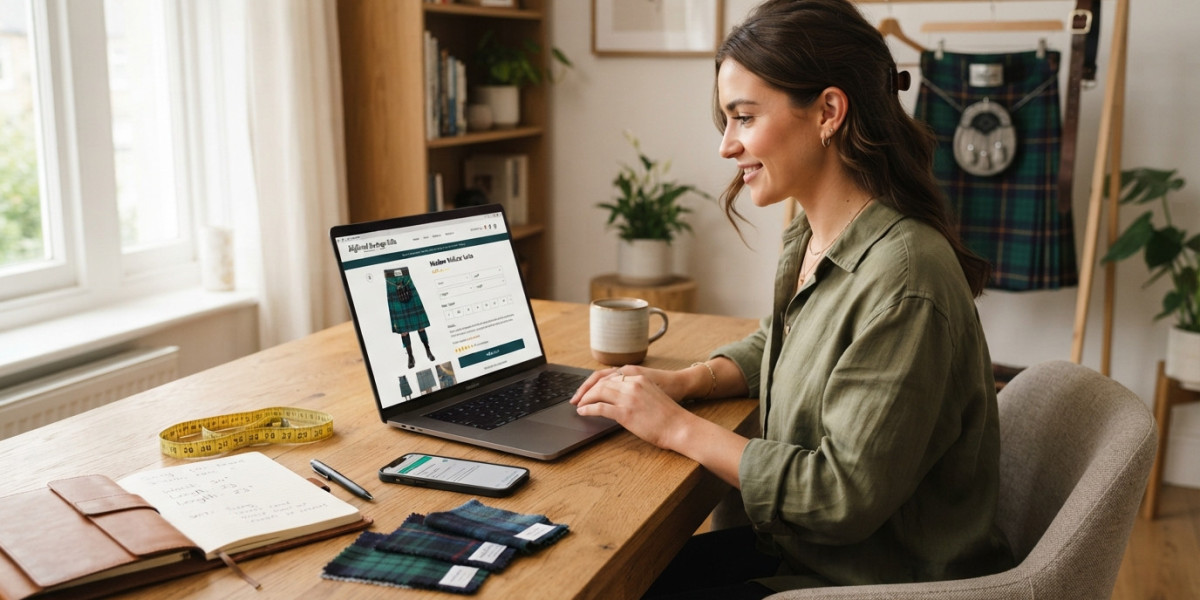

Most first-time buyers order a kilt in their regular pants size and end up with something that sits wrong at the waist. Kilt sizing runs on waist and length measurements, not the number printed inside your jeans, and getting this wrong is the single most common mistake in online kilt shopping.
Start With Your Measurements, Not the Size Chart
A kilt sits higher than pants, closer to the natural waist above the hip bone. Measure there with a soft tape, not around your hips, and write down both your waist and your length from that point to the top of your kneecap.
Every reputable seller lists a sizing guide next to the product. If a listing skips this entirely, treat that as a warning sign rather than an oversight.
Fabric Choice Changes Everything
Wool holds a crisp pleat and suits formal occasions, but it costs more and needs careful cleaning. Poly-viscose mimics the wool look at a lower price and travels better for warm-weather events.
Heavy cotton is the standard for daily-wear and outdoor kilts, since it resists abrasion and holds up to repeated washing. Denim and leather sit at the fashion end of the spectrum and trade some comfort for a distinct look.
Match the fabric to how often you plan to wear the kilt. A once-a-year formal piece can justify wool. A kilt for regular outdoor or casual use should lean toward cotton.
Reading a Listing Like a Buyer, Not a Browser
Good listings for Men’s Kilts for Sale show fabric weight in ounces, pocket count, closure type, and whether the kilt is custom-made to your measurements or sold in fixed sizes.
Photos matter as much as the description. Look for images showing the kilt worn, laid flat, and close up on the stitching. A listing with only a single stock photo often means the seller has not handled the actual product.
Check the return policy before checkout, especially for custom pieces. Custom-made kilts are frequently final sale, so confirm your measurements twice before submitting an order.
Shipping Timelines and Custom Orders
Custom-made kilts typically take one to three weeks to produce before they ship, since each one is cut and stitched to order rather than pulled from stock. Add shipping time on top of that, and plan any purchase tied to a specific event well in advance.
Ask the seller directly if a delivery date is not stated clearly. A seller who answers quickly and specifically is usually one who ships on schedule.
Red Flags Worth Walking Away From
Prices that look too low for handmade, custom-fit clothing usually mean mass-produced stock sizing sold as custom work. Sellers with no physical contact information or vague answers about fabric sourcing deserve extra scrutiny.
A trustworthy seller welcomes questions about measurements, fabric, and turnaround time. Hesitation or generic copy-paste answers are a sign to keep looking.
Frequently Asked Questions
What size kilt should I order if I am between sizes?
Order to your natural waist measurement rather than rounding up. Most custom sellers can adjust length separately from waist, so an in-between waist size is not usually a problem.
How long does a custom kilt take to arrive?
Production commonly runs one to three weeks, plus standard shipping time. Rush options exist with some sellers for an added fee.
Is poly-viscose a good choice for a first kilt?
Yes. It holds pleats well, costs less than wool, and handles everyday wear and travel better than a delicate formal fabric.


