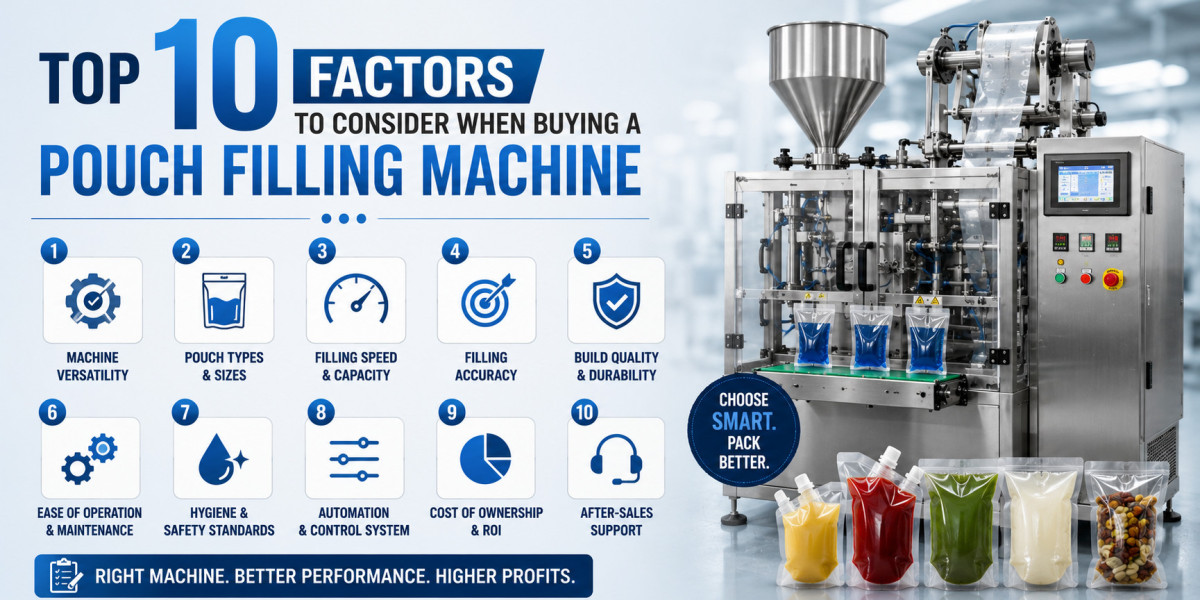

In the modern manufacturing landscape, the shift toward flexible packaging is undeniable. Businesses across food, beverage, pharmaceutical, and chemical industries are moving away from rigid containers in favor of versatile pouches. However, the success of this transition depends heavily on your equipment. Investing in a high quality pouch filling machine is a critical step for any manufacturing business looking to scale operations and improve product shelf life.
Choosing the right machinery requires a deep understanding of your production needs. A mismatch between your product requirements and the machine's capabilities can lead to costly downtime and wasted materials. This guide outlines the top ten factors you must consider to ensure you make an informed investment.
1. Production Speed and Capacity Requirements
The primary reason to automate your packaging process is to increase output. Before browsing models, you must calculate your required pouches per minute (PPM). Every machine has a rated speed, but the actual speed often depends on the product viscosity or density.
Consider your current demand and your projected growth for the next three to five years. It is often wiser to purchase a machine that can handle slightly more than your current needs. This prevents the equipment from becoming a bottleneck as your business expands.
2. Compatibility with Pouch Styles and Materials
Pouches come in various shapes, sizes, and materials. Whether you are using stand-up pouches, pillow bags, or gusseted bags, the machine must be compatible with that specific format. Some machines are dedicated to pre-made pouches, while others form the pouch from a roll of film.
Common pouch types include:
Stand-up pouches (Doypack)
Flat three-side or four-side seal pouches
Spouted pouches for liquids
Zipper-lock pouches for reusability
Ensure the machine can handle the specific film thickness and material composition you intend to use. Some eco-friendly or recyclable films require specialized sealing jaws and temperature controls.
3. Filling Accuracy and Waste Reduction
Inconsistent filling leads to two major problems: product giveaway and customer dissatisfaction. Product giveaway occurs when the machine overfills, cutting directly into your profit margins. Conversely, underfilling can lead to legal issues and a loss of consumer trust.
Look for a machine equipped with high-precision dosing systems. For powders, an auger filler is often preferred. For liquids, a piston or flow meter filler provides the best accuracy. A high quality system will include sensors that ensure the machine only fills when a pouch is correctly positioned.
4. User-Friendly Interface and Ease of Operation
Modern machinery should be accessible to your operators without requiring a PhD in engineering. A machine with a clear Human-Machine Interface (HMI) and a touchscreen control panel is essential. These systems allow operators to monitor performance and adjust settings on the fly.
Look for features such as:
Recipe storage for different product types
Real-time error reporting and diagnostics
Language options for diverse workforces
Intuitive navigation for setting speed and seal temperatures
5. Changeover Time and Flexibility
If your facility handles multiple products or pouch sizes, changeover time is a critical metric. A changeover is the process of switching the machine from one product or pouch configuration to another. If this takes hours, you lose significant production time every day.
Many top-tier machines now feature tool-less changeover designs. This allows operators to adjust guides and sensors manually or through the digital interface. The goal is to reduce downtime to less than 20 minutes for a standard size change.
6. Hygiene Standards and Washdown Capabilities
For those in the food and pharmaceutical sectors, sanitation is non-negotiable. The machine must be designed to prevent bacterial growth and allow for easy cleaning. Stainless steel construction, specifically Grade 304 or 316, is the industry standard for durability and hygiene.
Check if the machine has an Ingress Protection (IP) rating suitable for your environment. If you need to spray the machine down with water or chemicals, a washdown-rated design is necessary. This prevents moisture from damaging sensitive electrical components and motors.
7. Durability and Build Quality
A low price tag can be tempting, but a cheap machine often costs more in the long run. High-quality components from reputable brands ensure that the machine can withstand the rigors of a multi-shift production environment.
Key areas to inspect include:
Frame Strength: A heavy-duty frame reduces vibration and wear.
Sealing Jaws: These must provide consistent pressure and heat.
Pneumatics and Motors: Reliable brands like Festo, SMC, or Siemens are preferred for easy sourcing of replacements.
8. Integration with Existing Production Lines
Your packaging equipment does not exist in a vacuum. It must communicate effectively with upstream equipment, such as mixers or conveyors, and downstream equipment, such as checkweighers or case packers.
When choosing an automatic packaging machine , it is essential to consider the software compatibility. Most modern systems use PLC (Programmable Logic Controller) technology to synchronize the entire line. This ensures that if a problem occurs at one stage, the entire line reacts appropriately to prevent spills or damage.
9. Technical Support and Spare Parts Availability
Even the best machines will eventually require maintenance or spare parts. Before purchasing, evaluate the manufacturer's reputation for after-sales support. Do they offer remote diagnostic support? How quickly can they ship critical components to your location?
A machine becomes a liability if it sits idle for weeks waiting for a specific sensor or belt. Ensure the vendor has a local or reliable regional presence. Many companies also provide training programs for your staff to help them perform basic maintenance tasks in-house.
10. Overall Return on Investment (ROI)
The final factor is the total cost of ownership. This includes the initial purchase price, installation costs, training, and ongoing maintenance expenses. While a premium machine might require a larger upfront investment, its efficiency and lower waste rates often result in a faster ROI.
Calculate how much you will save on labor, material waste, and increased output. Often, a more expensive machine pays for itself within the first year of operation through sheer productivity gains and reduced downtime.
Conclusion
Selecting the right equipment is a foundational decision for your packaging business. By focusing on production speed, material compatibility, and ease of maintenance, you can ensure that your production line remains profitable and efficient. Always prioritize quality and support over the lowest initial price to guarantee long-term success.
Frequently Asked Questions (FAQs)
1. What is the difference between a rotary and a linear pouch filling machine?
Rotary machines move pouches in a circular path through various stations. They are typically faster and take up less floor space. Linear machines move pouches in a straight line and are often easier to access for maintenance, though they may have a larger footprint.
2. Can one machine handle both liquid and dry products?
While some machines are versatile, the filling system (doser) usually needs to be swapped. A machine used for liquids uses pumps or pistons, while a machine for dry goods uses augers or weighers. The base machine can often handle both if the appropriate filling attachments are switched out.
3. How often does a pouch filling machine require maintenance?
Daily cleaning is usually required, especially in food production. Deep maintenance, including lubricating moving parts and inspecting seals, should be performed weekly or monthly depending on the hours of operation. Always follow the manufacturer's specific maintenance schedule.
4. Are these machines compatible with eco-friendly packaging?
Yes, but you must specify this during the purchasing process. Biodegradable or recyclable films often have different melting points and require precise temperature control on the sealing jaws to ensure a secure bond without burning the material.
5. Do I need a specialized operator for this equipment?
While modern machines are designed to be user-friendly, basic technical training is recommended. Most manufacturers provide a training session upon installation to ensure your staff can handle daily operations, troubleshooting, and minor adjustments safely.


