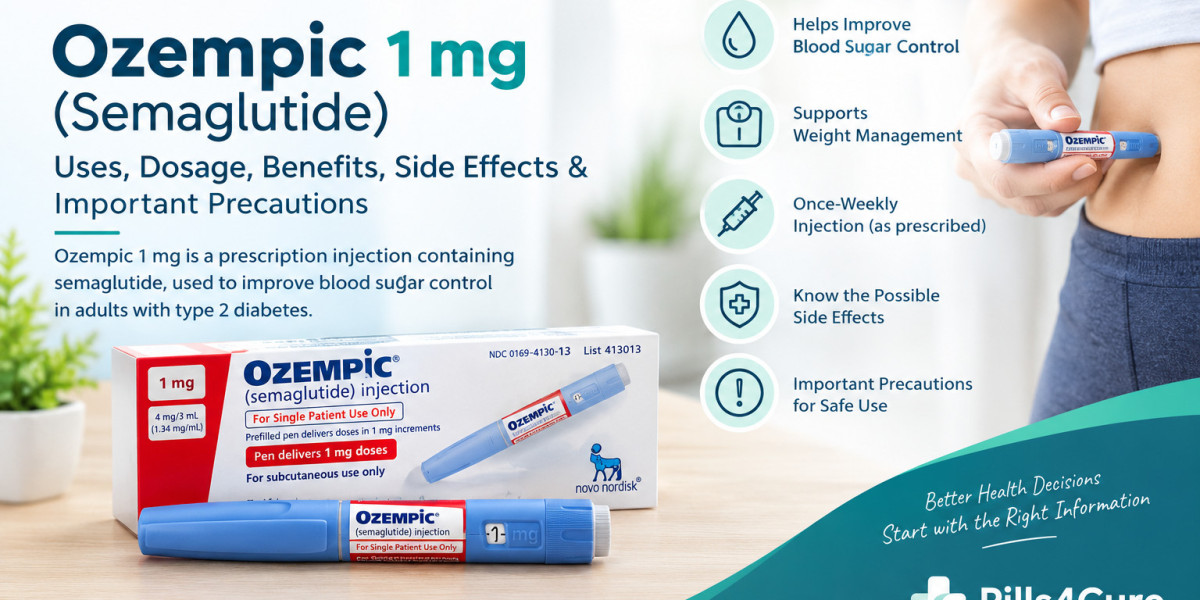

Ozempic 1 mg is a prescription medicine containing semaglutide, a GLP-1 receptor agonist used for the treatment of adults with insufficiently controlled type 2 diabetes. In the UK, Ozempic is licensed as a prescription-only medicine and is used alongside diet and exercise.
Semaglutide works on GLP-1 receptors involved in blood glucose regulation and appetite. Understanding how Ozempic 1 mg works, when it may be prescribed, and the precautions associated with treatment can help patients make informed healthcare decisions.
What Is Ozempic 1 mg?
Ozempic 1 mg dosage contains the active ingredient semaglutide and comes as a pre-filled injection pen. It is administered as a subcutaneous injection, meaning it is injected under the skin rather than into a vein or muscle.
In the UK, the Electronic Medicines Compendium (emc) lists Ozempic 1 mg as a prescription-only medicine. The UK product information states that it is indicated for adults with insufficiently controlled type 2 diabetes as an addition to diet and exercise.
How Does Semaglutide Work?
Semaglutide acts similarly to the natural hormone GLP-1. GLP-1 is involved in the body's response to food and plays a role in blood glucose regulation and feelings of fullness.
Semaglutide can:
- Help improve blood glucose control
- Increase insulin secretion when blood glucose is elevated
- Reduce glucagon secretion
- Slow gastric emptying
- Influence appetite and food intake
These effects make semaglutide an important treatment option for some adults with type 2 diabetes.
What Is Ozempic 1 mg Used For?
In the UK, Ozempic is indicated for adults with type 2 diabetes mellitus when blood glucose is not adequately controlled with diet and exercise. It may be used on its own when metformin is inappropriate because of intolerance or contraindications, or alongside other diabetes medicines.
It is important to distinguish Ozempic from other semaglutide products. The MHRA notes that several GLP-1 medicines are licensed in the UK, but not every GLP-1 medicine is authorised for weight management.
Ozempic 1 mg Dosage
Ozempic treatment is normally introduced gradually rather than beginning with 1 mg.
According to the current UK patient information:
- 0.25 mg once weekly for the first 4 weeks
- Then 0.5 mg once weekly
- The doctor may increase the dose to 1 mg once weekly if blood sugar is not adequately controlled with 0.5 mg
- A further increase to 2 mg once weekly may be considered if needed and prescribed
Patients should not change their dose themselves. The appropriate dose should always be determined by a doctor, pharmacist, or other qualified healthcare professional.
How Is Ozempic 1 mg Administered?
Ozempic is injected under the skin, commonly in the front of the thigh, abdomen, or upper arm. It should not be injected into a vein or muscle. Patients using the pen for the first time should receive appropriate instructions from a doctor or nurse.
Ozempic 1 mg is generally administered once weekly, according to the prescribed treatment schedule.
Following the correct injection technique is important for receiving the intended dose.
Common Side Effects
Like any medicine, Ozempic can cause side effects. Gastrointestinal effects are among those commonly associated with semaglutide treatment.
Possible side effects include:
- Nausea
- Vomiting
- Diarrhoea
- Constipation
- Abdominal pain
Some side effects can be more noticeable when treatment begins or when the dose is increased. Anyone experiencing persistent or severe symptoms should speak with their healthcare professional.
Important Safety Precautions
Ozempic is not suitable for everyone. Before starting treatment, patients should tell their doctor about their medical history and any medicines they currently take.
Particular attention may be needed for people with a history of pancreatic problems, diabetic eye disease, kidney problems, or significant gastrointestinal symptoms.
Patients should also discuss any previous allergic reactions to semaglutide or the ingredients in the medicine.
Ozempic and Low Blood Sugar
The risk of low blood sugar, or hypoglycaemia, may increase when Ozempic is used together with certain diabetes medicines, particularly insulin or medicines known as sulfonylureas.
Possible symptoms include:
- Sweating
- Shaking
- Hunger
- Dizziness
- Weakness
- Confusion
- Fast heartbeat
Patients using Ozempic alongside other diabetes treatments should follow their healthcare professional's advice about blood glucose monitoring.
Ozempic and Weight Management
Semaglutide is associated with effects on appetite and food intake, but it is important not to assume that every semaglutide product has the same licensed indication.
The UK government explains that several GLP-1 medicines are licensed in the UK for specific uses, including diabetes and, for certain products, weight management.
Ozempic should be used according to its approved indication and prescription. Patients interested in weight management should discuss appropriate licensed treatment options with a healthcare professional rather than using Ozempic without medical advice.
Storage of Ozempic 1 mg
The UK patient leaflet states that unopened Ozempic should be stored in a refrigerator at 2°C–8°C and should not be frozen. During use, the pen can be kept for up to 6 weeks when stored below 30°C or refrigerated according to the product instructions.
The pen should also be protected from light, and patients should not use the medicine if it has been frozen or if the solution does not appear clear and colourless or almost colourless.
Ozempic in the UK: What Patients Should Know
For people in the UK, Ozempic is a licensed prescription medicine and should be used through appropriate healthcare channels. The MHRA provides guidance on GLP-1 medicines and stresses that patients should use these medicines safely and only for authorised purposes.
Patients should be particularly cautious about purchasing GLP-1 medicines from unverified online sources. The MHRA has highlighted concerns around illegal online weight-loss medicines and the importance of obtaining medicines through legitimate routes.
Buying Ozempic Responsibly
When looking for healthcare products online, customers should consider the legitimacy of the pharmacy, product information, prescription requirements, and appropriate medical guidance.
Pills4Cure is an online pharmacy providing access to healthcare products and medicines. For prescription medicines such as Ozempic, responsible use means following the prescribed dosage and consulting a qualified healthcare professional when there are questions about treatment.
An online pharmacy should complement—not replace—professional healthcare advice.
Frequently Asked Questions
Is Ozempic 1 mg a starting dose?
No. The UK patient information states that treatment starts at 0.25 mg once weekly for four weeks, followed by 0.5 mg. A doctor may then increase the dose to 1 mg if additional blood glucose control is required.
How often is Ozempic 1 mg taken?
When prescribed at the 1 mg strength, Ozempic is administered once weekly.
Is Ozempic available in the UK?
Yes. Ozempic 1 mg is listed in the UK medicines information as a prescription-only medicine containing semaglutide.
Can I increase my Ozempic dose myself?
No. Dose changes should only be made according to instructions from your healthcare professional.
Is Ozempic a weight-loss injection?
Ozempic is indicated in the UK for adults with type 2 diabetes. Other semaglutide products have specific authorised indications for weight management. Patients should use the medicine that has been prescribed for their individual medical needs.
Final Thoughts
Ozempic 1 mg (semaglutide) is a once-weekly prescription treatment used in the UK for adults with insufficiently controlled type 2 diabetes, alongside diet and exercise. Its gradual dose escalation, potential gastrointestinal side effects, injection requirements, and storage conditions are important parts of responsible treatment.
Whether you are researching Ozempic for diabetes care or comparing semaglutide treatment options, speak with a qualified healthcare professional before starting or changing treatment. If obtaining medicines online through Pills4Cure, make sure prescription requirements and responsible medicine-use practices are followed.


