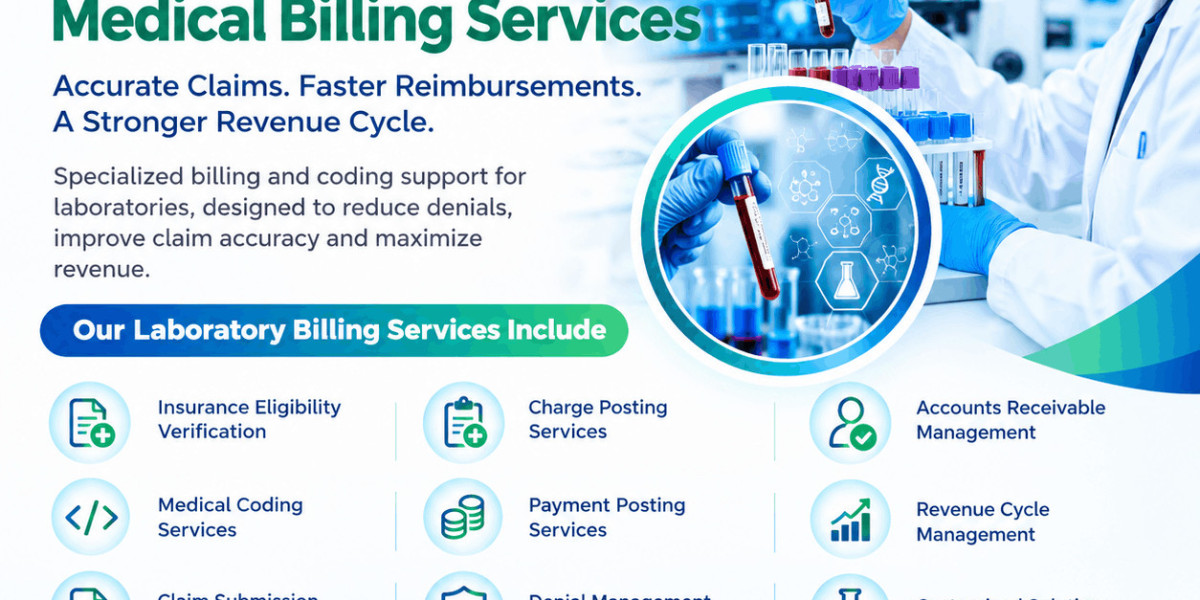

Laboratories provide a wide range of diagnostic services, and each service must be represented appropriately when a claim is submitted to a payer. When coding, documentation, patient information, and claims processing work together, laboratories can establish a more organized billing workflow.
This is why Laboratory Medical Billing Services often include specialized coding and claim management support.
What Is Laboratory Medical Coding?
Laboratory medical coding involves translating documented laboratory and diagnostic services into standardized codes used for healthcare billing. The selected codes need to accurately represent the services performed and be supported by appropriate documentation.
Coding is not an isolated activity. It connects clinical documentation with the financial side of healthcare. If the information on a claim does not accurately represent the service provided, the claim may require correction or may not be reimbursed as expected.
Why Coding Accuracy Matters
Laboratories often process a large volume of claims. A small percentage of inaccurate claims can still create substantial administrative work when claim volume is high.
Incorrect or incomplete coding may contribute to rejected or denied claims. It can also create additional work for billing teams that must research the issue, correct the claim, and resubmit it.
Professional laboratory medical coding services can help establish a structured review process before claims are submitted.
The Laboratory Billing Workflow
A typical laboratory billing workflow includes several connected steps.
The process begins with patient registration and insurance information. Eligibility verification can help determine whether the patient's coverage is active and identify applicable requirements.
Once laboratory services are performed, charges must be captured accurately. Coding specialists then assign appropriate codes based on available documentation and applicable guidelines.
The claim is reviewed and submitted electronically to the appropriate payer. After submission, billing staff monitor the claim and respond to rejections or denials.
Payments and adjustments are posted once received, while unpaid claims are followed up through accounts receivable management.
Importance of Charge Capture
Accurate charge capture is essential because services that are not entered correctly may not be billed. Missing or incorrect charges can affect reimbursement and create discrepancies between laboratory services and billing records.
A strong billing workflow should include processes for reviewing charges before claims are finalized.
Laboratory charge posting services can support laboratories that want dedicated assistance with this stage of the revenue cycle.
Claims Scrubbing and Quality Review
Before claims are submitted, billing teams can conduct quality checks to identify potential errors. Depending on the billing system and workflow, these checks may involve patient demographics, insurance information, coding, required information, and other claim elements.
This type of review can help laboratories identify avoidable issues before claims reach the payer.
While claim review cannot guarantee payment, it can support a more consistent submission process.
Managing Laboratory Claim Denials
When a claim is denied, the billing team needs to determine the reason and identify the appropriate next step.
Laboratory claim denial management may involve reviewing payer messages, checking documentation, correcting claim information, and submitting an appeal or corrected claim when appropriate.
Denial tracking can also reveal recurring problems. If similar denials appear repeatedly, the laboratory can review its internal workflow to determine whether changes are necessary.
Payment Posting and Reconciliation
Once insurance payments are received, they should be posted accurately to the appropriate accounts. Payment posting involves recording payments, contractual adjustments, patient responsibility, and other relevant financial information.
Accurate posting helps laboratories maintain reliable account balances and identify claims that remain unpaid or underpaid.
Laboratory AR Management
Accounts receivable management focuses on outstanding balances. Billing specialists can monitor aging accounts and prioritize follow-up based on factors such as payer, claim status, age, and balance.
Effective laboratory AR management services can provide laboratories with better visibility into outstanding revenue.
Benefits of Specialized Laboratory Billing
Working with a specialized laboratory medical billing company can provide access to billing professionals who understand laboratory workflows. This can be useful for independent laboratories, diagnostic centers, pathology laboratories, and other testing organizations.
Specialized billing support can also reduce the burden on internal staff and provide additional reporting and operational visibility.
Conclusion
Laboratory billing is a connected process in which coding, charge capture, claim submission, payment posting, denial management, and AR follow-up all influence financial performance.
Professional Laboratory Medical Billing Services can help laboratories organize these activities and establish a consistent approach to claim management. Accurate coding and systematic billing processes can support cleaner claims, better tracking, and a more efficient revenue cycle.