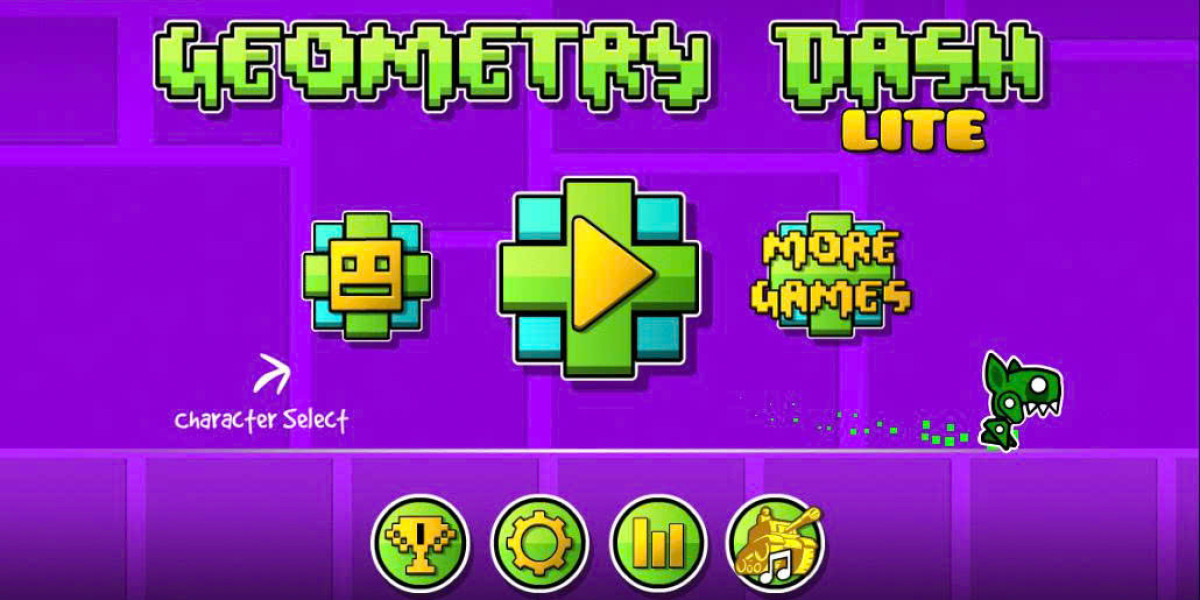

Some games explain themselves in a manual. Others hand you a square, a beat, and a test of nerve — and somehow, that turns out to be more than enough. If you've ever watched someone play Geometry Dash for a few seconds, you've seen the setup: a neon icon glides forward on its own, and the only thing you control is when you move. Simple doesn't begin to cover it. And yet the moment that cube smacks into a spike for the fiftieth time, you'll understand exactly why millions of players can't put it down.
What This Game Really Is
Before we talk strategy, let's set the scene. Geometry Dash is a rhythm-based platformer where your character moves forward automatically. You don't steer left or right; you don't run or sprint. Your whole job is timing — jumping over spikes, threading between saw blades, and riding through portals that shift your form, your gravity, or your speed mid-run.
Here's the delightful trick that keeps it addictive: the challenge rises fast while the controls stay almost embarrassingly simple. That contrast is the magic. A one-button game that can make your palms sweat more than a hundred-button RPG is doing something right. What makes it click is that many hazards are synced to the music — listen closely and the beat often tells you when to move.
Getting Your First Few Runs Right
If you're completely fresh, don't dive into the hardest level you can find. That's a recipe for frustration, and the game does a much better job teaching you if you let it go in order.
Start with Stereo Madness. It's the opening level for a reason. Its job is to make the basic jump timing feel natural, so take your time and don't rush to the finish line. Once your fingers stop thinking and just move on rhythm, move up through Back On Track, Polargeist, and beyond — each one quietly adds a new challenge so you learn by doing.
The core rule is simple: watch the obstacles ahead and press your input at the right moment. On desktop that's Space, left click, or the Up Arrow. On touch devices, it's a tap. The game form you're in changes what that input does — in Ship sections you hold to rise and release to fall; in Ball mode you flip gravity; as a Robot your jump height depends on how long you hold the button. Don't try to memorize all seven forms at once. Just let each level introduce them to you naturally.
Still, here's the single most useful secret for beginners: don't treat every attempt as a speedrun. A run that ends early is still practice. Watch what killed you, learn the pattern, and try again with that knowledge in your pocket.
Tips That Actually Move the Needle
Anyone can throw a cube at a wall repeatedly. What separates a growing player from a stuck one is a handful of habits — and none of them require talent, just a little patience.
Learn one section at a time. When you keep dying at the same spot, stop your full runs and study what happens right before the fail. Recognizing the shape of a pattern makes the correct timing far easier to reproduce. You're not memorizing the whole level at once; you're stacking small wins.
Embrace practice mode. This is the tool most underused by newer players. Instead of restarting the entire level every time you slip, drop checkpoints and drill the part that's giving you grief until it stops being scary. It feels slower, but it's genuinely the fastest way to improve.
Listen to the music — actually listen. Geometry Dash levels are built with rhythm in mind. Repeated patterns and transitions often land right on the beat. Turn your sound up and let the track be a second pair of eyes. You might be surprised how much your timing locks in.
Adapt to every form, don't fight it. When a portal flips you from a Cube into a Ship or a Wave, your instinct might be to keep the same rhythm you were just using. That's a trap. Each form asks for its own timing, so give yourself a half-second to read the new movement rules before you panic.
Chase consistency, not that one lucky run. Clearing a tricky section once feels amazing — but doing it several times in a row feels reliable. Consistency is what actually carries you through a full level. If you nail it once and then die there again next run, keep drilling until it's automatic.
And when your timing turns to mush, step away. Repeating the same mistake over and over usually means your focus is gone. A short break — even two minutes of standing up and stretching — does wonders. You'll come back sharper than if you'd grinded through your frustration.
The Takeaway
Geometry Dash isn't a game about reflexes you're born with. It's a game about attention, repetition, and the quiet joy of watching something impossible slowly become routine. There's a real, almost meditative satisfaction in learning your way through a wall that once felt unbeatable — and then gliding past it on autopilot as the music swells.
So pick a level, put your headphones on, and give yourself permission to fail. Every crash is just the game showing you exactly what to practice next. Once that neon cube finally carries you across the finish line, you'll understand — it was never really about the jump itself. It was about who you became while learning to land it.


