
Introduction
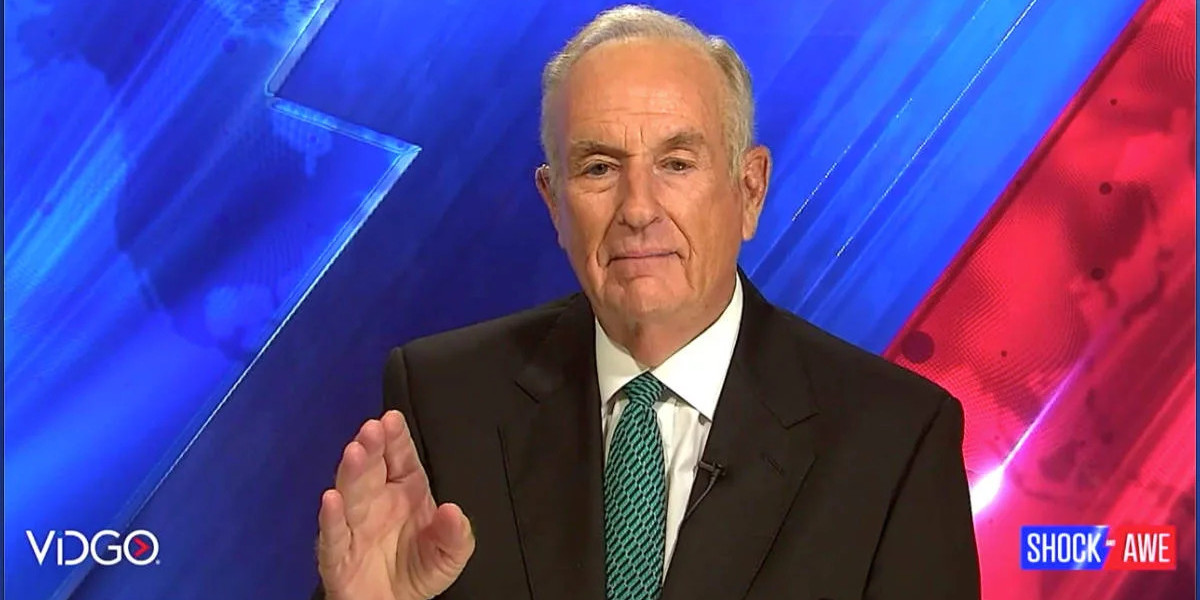
Bill O’Reilly is one of the most recognizable and controversial figures in American television journalism. For decades, his name was closely associated with political debate, aggressive interviews, cultural arguments, bestselling books, and a distinctive broadcasting style that made him difficult to ignore. To some viewers, he represented a forceful voice willing to challenge politicians, media personalities, celebrities, and institutions. To others, he became a symbol of the increasingly combative nature of American cable news. Whatever the opinion, O’Reilly succeeded in accomplishing something that few television personalities manage: he turned his name, voice, personality, and worldview into a powerful media brand click here.
Understanding Bill O’Reilly requires looking beyond the television screen. The man behind the microphone was shaped by a working-class upbringing, Catholic schooling, competitive ambition, formal education, traditional journalism, television reporting, and an intense belief in personal discipline. His career was not built overnight. Before he became the familiar host of The O’Reilly Factor, he worked in local television markets, reported for major networks, anchored Inside Edition, returned to graduate school, and eventually joined a young Fox News Channel in 1996. From there, he developed one of the most successful programs in cable television history.
O’Reilly's story is also one of contradiction. He presented himself as a journalist who valued facts and straightforward discussion, yet his approach was frequently opinionated and confrontational. He criticized political correctness while carefully cultivating a television persona that depended heavily on strong opinions and memorable confrontations. He became a bestselling author while also attracting criticism over the style and substance of his arguments. His enormous success at Fox News eventually came to an end amid sexual harassment allegations and settlements, permanently changing the way his career is viewed.
The most interesting way to understand O’Reilly is therefore not simply to label him conservative, controversial, successful, or outspoken. His career was more complicated than any single description. He was a journalist, television personality, author, interviewer, commentator, businessman, and cultural figure who understood the power of television better than most of his contemporaries.
Early Life and the Formation of a Strong Personality
William James O’Reilly Jr. was born on September 10, 1949, in New York City and grew up in Levittown, Long Island. His upbringing in a traditional Irish Catholic family played an important role in shaping the values he would later emphasize publicly. Discipline, personal responsibility, hard work, faith, family, and respect for authority were themes that repeatedly appeared in his discussions of American society.
O’Reilly has often described himself as someone who learned the value of work at an early age. He held jobs while still young, including mowing lawns, shoveling snow, working at an ice cream stand, and eventually operating a house-painting business. These experiences contributed to the working-class image that became an important part of his public identity. Even after achieving considerable wealth and fame, he continued to present himself as someone who understood ordinary Americans because he had experienced the pressures of earning money and building a career from the ground up.
His childhood and education also helped establish the directness that later became central to his television persona. O’Reilly was not known for presenting himself as distant or detached. Instead, he developed an image of someone who believed strongly in speaking plainly and challenging people when he thought they were avoiding an uncomfortable truth.
That personality could be an advantage in broadcasting, but it could also create conflict. O’Reilly's career repeatedly demonstrated both sides of his temperament. His willingness to confront people helped make his interviews compelling. At the same time, his tendency toward confrontation frequently generated criticism and controversy.
Education and the Beginning of a Journalism Career
O’Reilly attended Marist College, where he studied history. His interest in history would later become significant because much of his work as an author focused on major events and personalities from America's past. After college, he spent time teaching in Florida before pursuing graduate education in broadcast journalism at Boston University.
His education in journalism came during a period when American news organizations were undergoing significant changes. Television was becoming increasingly important as a source of information, while major political events were demonstrating the influence that television journalists could have on public opinion.
O’Reilly entered the profession through local television, working in several American cities before reaching national networks. His early career involved the traditional work of a television reporter: gathering information, covering events, conducting interviews, writing reports, and appearing on camera. He eventually worked for CBS News and ABC News, gaining experience in national reporting.
These years were important because they established O’Reilly as more than a television personality. He had a genuine background in broadcast journalism before becoming known primarily for political commentary. His reporting career also earned him recognition, including Emmy Awards and other honors for his work.
His assignments exposed him to a wide variety of stories and political environments. He covered international conflicts, domestic events, and major news stories, gaining the kind of experience that helped prepare him for the fast-moving world of television news.
Inside Edition and the Discovery of His Television Persona
A major turning point came in 1989 when O’Reilly joined Inside Edition. The program was different from traditional evening network news. It focused on a mixture of current events, crime, entertainment, celebrity stories, and unusual human-interest subjects. O’Reilly eventually became the program's anchor.
Inside Edition gave him something that traditional network reporting had not fully provided: an opportunity to develop a recognizable on-screen personality. Instead of simply delivering reports, he became the face of a program. Viewers began to associate his voice, mannerisms, questions, and opinions with the show itself.
This experience was critical to his later success. O’Reilly learned how television audiences responded to personality-driven broadcasting. He understood that viewers did not simply want information; many wanted a host they could recognize, trust, admire, dislike, or argue with.
His years at Inside Edition also demonstrated his ability to operate in a highly competitive television environment. He was no longer simply another reporter working behind the scenes. He was becoming a recognizable television figure.
After leaving Inside Edition, O’Reilly made another unusual career move. He returned to school and attended Harvard University's Kennedy School of Government, earning a master's degree in public administration. This decision reflected a recurring characteristic of his career: ambition combined with a willingness to reinvent himself.
For more information check now.
The Birth of The O’Reilly Factor
When Fox News Channel launched in 1996, it was a relatively new player in American cable television. The network aimed to compete with established news organizations while offering programming that emphasized a different perspective on politics and culture.
O’Reilly was given a prime-time program that initially carried another title before becoming The O’Reilly Factor. At first, there was no guarantee that the program would become a major success. Cable television was already crowded, and the new network had to establish an audience.
O’Reilly's program gradually developed a distinctive formula. He would introduce a political or cultural subject, present his interpretation of the issue, interview guests, challenge opposing viewpoints, and return to recurring themes about American values and public life.
The program became famous for its "No Spin Zone" identity. The phrase captured the image O’Reilly wanted to project: a host who believed he could cut through political language and expose what he considered the truth behind complicated stories.
In practice, the show was much more than a conventional news program. It was a mixture of commentary, interviews, analysis, opinion, and entertainment. That combination proved enormously successful. The O’Reilly Factor eventually became the highest-rated program in cable news for an extended period, turning O’Reilly into one of the most influential television hosts in the country.
What Made O’Reilly Different
O’Reilly's broadcasting style was difficult to confuse with anyone else's. His delivery was forceful, his questions were often direct, and he was willing to interrupt guests when he believed they were avoiding the issue. He frequently used short phrases and memorable expressions to make complex political arguments accessible to a large television audience.
His approach also depended on conflict. Television audiences could immediately understand who disagreed with whom. A discussion did not necessarily need to produce agreement to be successful. In many cases, disagreement itself became the entertainment.
O’Reilly understood that political television was not only about information. It was also about emotion. Viewers could feel anger, amusement, frustration, satisfaction, or excitement while watching a political interview. His program often turned ideological disagreements into dramatic television.
This was one of his greatest strengths as a broadcaster. It was also one of the reasons critics accused him of oversimplifying complicated subjects. His supporters saw his directness as honesty. His critics sometimes saw the same behavior as bullying or theatrical confrontation.
The difference between those interpretations often depended on the viewer's political perspective. O’Reilly's ability to inspire strong reactions was itself evidence of his effectiveness as a television personality.
The Conservative Commentator and the Independent Image
O’Reilly became closely associated with conservative politics, although he frequently resisted simple political labels. He often described himself as an independent thinker rather than a traditional partisan. He criticized politicians from different sides when he believed they deserved criticism, although his cultural and political positions frequently placed him closer to conservative audiences.
One reason his political identity was difficult to categorize was that he sometimes disagreed with conservative politicians and movements. His central concerns were often less about party loyalty and more about what he considered traditional American values, personal responsibility, national security, crime, education, religion, and cultural change.
At the same time, his program became an important part of the conservative media landscape. Millions of viewers watched him discuss political developments, presidential administrations, social conflicts, and controversial cultural issues.
O’Reilly's importance extended beyond individual opinions. His success helped demonstrate that cable television could support personalities whose programs were built around strong points of view. This model became increasingly common throughout American television.
O’Reilly as an Author
Television was only one part of O’Reilly's career. He also became an extremely successful author. His books included political commentary, memoirs, historical works, and novels. Some of his most commercially successful books focused on major figures and events in American history.
His historical books, many of which were written with Martin Dugard, included works about Abraham Lincoln, John F. Kennedy, Jesus, Ronald Reagan, and the American Revolution. These books presented history in a dramatic, accessible style designed for a mass audience.
The popularity of these books demonstrated something important about O’Reilly's appeal. His audience did not disappear when the television program ended. Many viewers were also interested in his interpretation of history and politics.
His writing style resembled his television style in several ways. He preferred direct language, dramatic storytelling, recognizable characters, conflict, and strong conclusions. Rather than treating history as a distant academic subject, his books presented historical events as stories involving ambition, betrayal, courage, violence, political struggle, and personal sacrifice.
That approach made his books highly accessible to readers who might not normally read academic history.
Controversy and the Cost of Fame
Bill O’Reilly's career cannot be discussed honestly without addressing controversy. His outspoken style made him a frequent target of criticism. Disputes arose over his statements, interviews, political commentary, reporting methods, and treatment of guests and colleagues.
One of the most significant controversies involved allegations of sexual harassment and misconduct. Several women accused O’Reilly of inappropriate behavior, and settlements were reached in multiple cases. In 2017, after extensive reporting and growing pressure, Fox News announced that O’Reilly would not return to the network.
The end of his Fox News career marked a dramatic change. For more than two decades, O’Reilly had been one of the most prominent faces on American cable television. His departure showed that even an exceptionally successful media personality could become vulnerable when professional controversies reached a critical point.
It also complicated his legacy. Supporters continued to emphasize his influence, ratings success, books, and broadcasting achievements. Critics argued that the allegations and settlements had to be considered an essential part of evaluating his career.
Both realities can exist at the same time. O’Reilly was undeniably successful, and he was also a deeply controversial figure whose career ended at a major network under circumstances that significantly affected his reputation.
Life After Fox News
Leaving Fox News did not end O’Reilly's media career. Instead, he moved toward formats that gave him greater control over his content and relationship with his audience.
His No Spin News platform became an important part of his post-Fox career. He continued producing political commentary, interviews, and discussions outside the traditional cable television structure. Radio and digital broadcasting allowed him to maintain contact with an audience that had followed him for years.
This transition reflected a larger change in the media environment. Television networks were no longer the only way for established personalities to reach large audiences. Hosts with loyal followings could communicate directly with listeners and viewers through online platforms, podcasts, radio programs, and subscription services.
For O’Reilly, this meant that leaving Fox News did not necessarily mean disappearing from public life. His name remained valuable because he had spent decades building a loyal audience.
The Man Behind the Microphone
The most revealing part of O’Reilly's career may be the contrast between the public personality and the private individual suggested by his biography. On television, he was loud, confident, confrontational, and seemingly unwilling to retreat from an argument. Away from the studio, his life story reflects a person who spent decades pursuing education, professional advancement, financial success, and personal independence.
His career was built through repeated reinvention. He moved from local reporting to national television, from traditional journalism to tabloid television, from television to books, and from network broadcasting to independent media.
That adaptability is one of the defining features of his professional life. O’Reilly understood that a media career could not remain fixed. As audiences changed, he changed with them.
His public personality also reflected his understanding of branding. The phrases associated with his programs, his distinctive manner of speaking, his appearance, and his approach to interviews all became recognizable parts of a larger identity. Viewers knew what they were going to get when they watched him.
That consistency helped build trust among supporters and frustration among critics. Either way, it created attention.
The Legacy of The O’Reilly Factor
The O’Reilly Factor left a lasting mark on American television. Its success helped establish the idea that a cable news program could revolve around a strong host rather than simply around a rotating collection of reporters.
The program's popularity influenced the broader development of opinion-driven television. News channels increasingly recognized the commercial power of recognizable personalities. Political commentary became more personality-centered, and debates became increasingly structured around hosts with distinct ideological identities.
O’Reilly's influence can therefore be measured in more than ratings. His style became part of the language of cable news. The direct confrontation, the dramatic interview, the strong opening monologue, and the host-centered program became familiar elements of political broadcasting.
At the same time, his career raised questions about the boundaries between journalism and commentary. How much opinion should a news host express? How aggressive should an interviewer be? When does challenging a guest become performance? Can a personality-driven program remain fair while openly promoting a particular worldview?
These questions remain relevant because O’Reilly's career helped bring them into the center of American media culture.
Why Bill O’Reilly Remains a Fascinating Figure
Bill O’Reilly remains fascinating because his career contains several seemingly opposing qualities. He was a trained journalist who became one of television's most recognizable commentators. He was associated with conservative politics while frequently emphasizing his independence. He built his reputation by challenging powerful people while becoming a powerful figure himself.
He represented an older form of television broadcasting while eventually adapting to newer forms of media. He emphasized traditional values while building a career around a rapidly changing media industry. He became famous for demanding accountability from others while his own professional conduct came under intense scrutiny.
These contradictions make his story more complicated than either admiration or criticism alone can explain.
His rise also says something about American audiences. The success of The O’Reilly Factor demonstrated that millions of people wanted more than neutral presentation of headlines. They wanted interpretation. They wanted arguments. They wanted personalities who could tell them what an event meant and why they should care about it.
O’Reilly understood that demand better than many of his contemporaries.
Conclusion
Decoding Bill O’Reilly means looking beyond the famous voice, the television desk, and the confrontational interviews. His career began long before The O’Reilly Factor and continued after his departure from Fox News. He was shaped by a disciplined upbringing, education, traditional journalism, years of television reporting, and an extraordinary ambition to become a major media personality.
His greatest professional achievement was creating a program that transformed him from a television host into a national institution. The O’Reilly Factor became one of the defining programs of the cable news era, and O’Reilly himself became a central figure in America's political and cultural conversations.
Yet his legacy is not uncomplicated. The controversies surrounding his conduct, particularly the sexual harassment allegations and settlements that preceded his departure from Fox News, are an unavoidable part of his story. They changed the public understanding of his career and ensured that his legacy would be debated rather than simply celebrated.
Still, the lasting significance of Bill O’Reilly comes from his understanding of television and audience psychology. He knew how to command attention, create conflict, simplify complicated subjects, build memorable phrases, and make viewers feel personally involved in political arguments. He understood that a television host could become the story as much as the people being interviewed.
Behind the microphone was a man who spent decades building a career around communication, confrontation, ambition, and personal conviction. Whether one admired him or strongly disagreed with him, it was difficult to ignore him. That ability to remain at the center of public discussion is ultimately what made Bill O’Reilly one of the most consequential and controversial figures in modern American television.